










Virtual IBAN: what it is and why it saves you hours of bank reconciliation
It's not a second account. It's a smart trick to know instantly who paid you, without opening a spreadsheet.
You receive twenty bank transfers a day, and every time you have to figure out which customer, which order, which department they belong to. If that sounds more like detective work than running a business, the problem has a name: you're missing a layer of automatic identification on your incoming payments. A virtual IBAN solves exactly this, and here's how.
What a virtual IBAN is (and isn't)
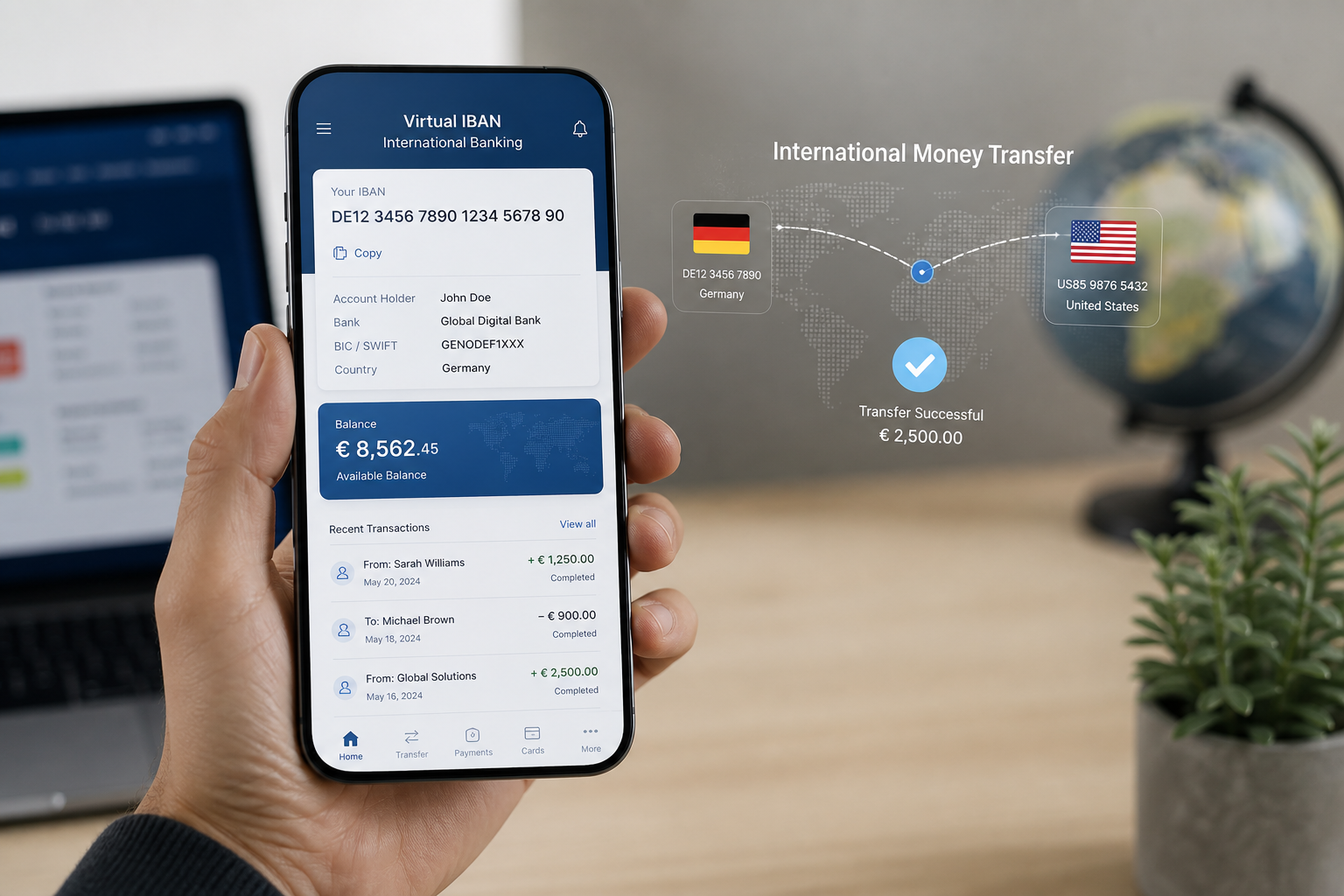
A virtual IBAN is a dedicated IBAN code that points to a real underlying account: the funds all land there, but each virtual IBAN tells you exactly where they came from.
It's not a separate account with its own liquidity: it's a smart label on top of your main account, designed for traceability, not for keeping funds apart.
What it's actually for, with concrete examples
A letting agency managing rentals for multiple landlords can assign a virtual IBAN to each property, and immediately know which tenant paid, without cross-referencing handwritten payment references.
A marketplace collecting payments on behalf of multiple sellers can use virtual IBANs to automatically know which sale belongs to which seller, before even opening the back office.
A software company with enterprise subscribers can give each enterprise client its own virtual IBAN, so an incoming transfer arrives already tagged with the right client's name.
What changes in bank reconciliation
Without virtual IBANs, reconciliation means opening the bank statement and manually matching each movement to an invoice or order, hoping the payment reference was filled in correctly.
With virtual IBANs, the matching is nearly automatic: the system already knows, from the destination IBAN code, what that payment belongs to. The time saved grows linearly with your transaction volume.
For anyone handling dozens or hundreds of recurring payments a month, this isn't a technical detail: it's the difference between an accountant closing the books in an hour or in a full day.
- A virtual IBAN doesn't separate funds, it tags them: the money always flows into the main account.
- It's useful anywhere you need to automatically distinguish the origin of a payment: rentals, marketplaces, enterprise subscriptions.
- The main benefit is time saved in bank reconciliation, not extra security for the funds.
- The more recurring payment volume you handle, the greater the return on investment.
- Thinking a virtual IBAN is a separate account: it isn't, and it offers no fund segregation.
- Not integrating it with your accounting system: the benefit only shows up if the automatic matching actually reaches your systems.
- Underestimating it if you handle few payments a month: the benefit scales with volume, it's not for everyone equally.
Frequently asked questions
It depends on the provider: some include it in the business account plan, others charge per active virtual IBAN or based on the volume of transactions handled.
Yes, that's the most common use case: one main account with dozens or hundreds of virtual IBANs, one per customer, property, or sales channel.
It depends on the provider and currency: many services support this for SEPA payments in euros, with variable availability for other currencies or regions.
No more manual reconciliation
With Daevon's virtual IBAN reconciliation, you always know who paid you, without cross-checking statements and invoices by hand.