










Stripe alternatives: when it's worth switching, and when it isn't
Stripe isn't "the best" or "the worst". It's the right tool for some cases, and the wrong one for others.

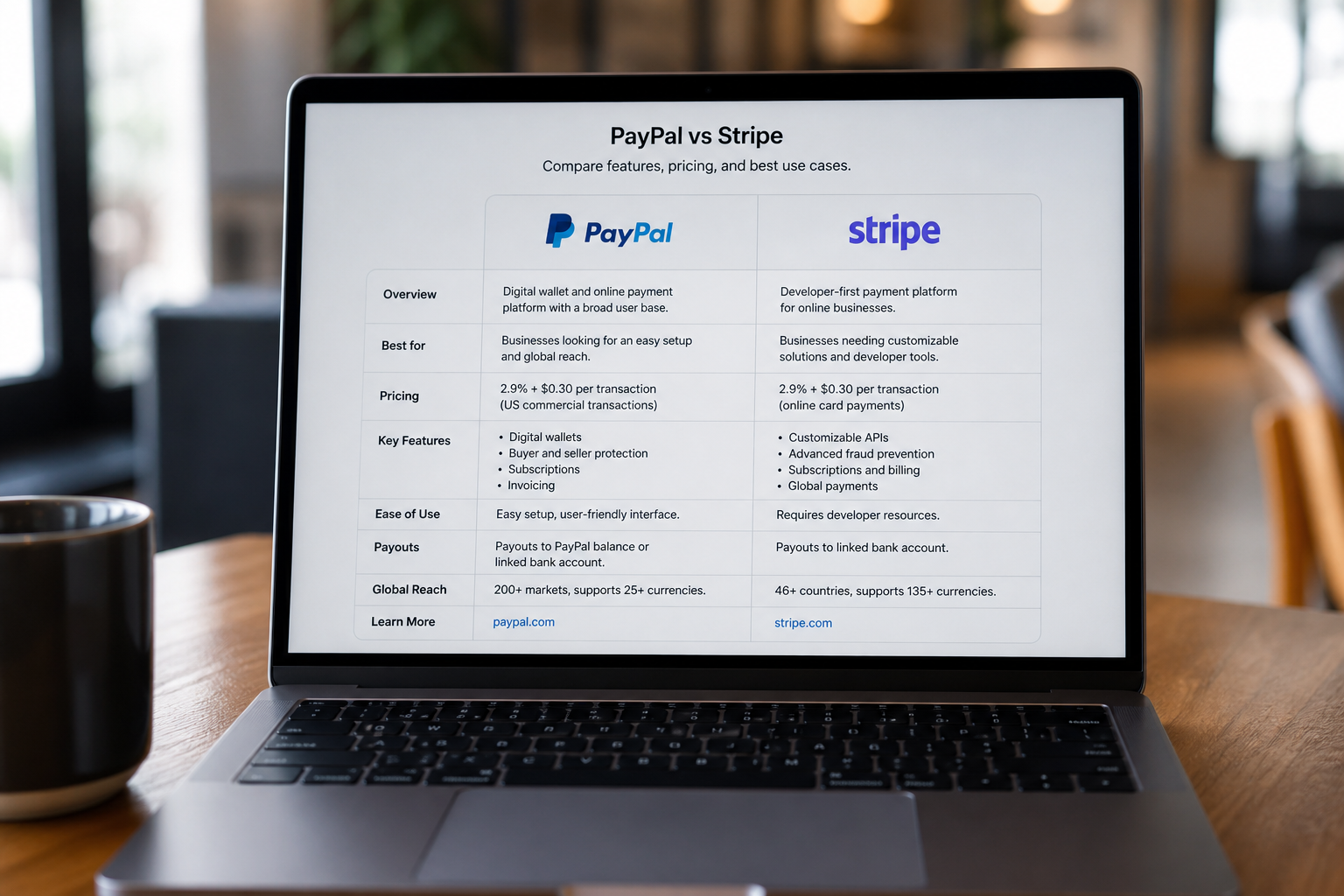
Stripe is probably the most-cited payment gateway in developer guides, and it's a great product for anyone who needs deep technical flexibility. But "more flexible" doesn't automatically mean "more suited to you". Here's when it's worth looking elsewhere, and what to actually compare before deciding.
When Stripe is the right choice
If you have an in-house technical team and want maximum control over the payment flow, Stripe offers excellent developer documentation and highly flexible APIs.
For international e-commerce with complex multi-currency needs, Stripe's geographic coverage is a genuine strength.
When it's worth looking elsewhere
If you don't have a technical team and need a fast integration without custom code, a provider with dedicated support in your language and guided onboarding can save you weeks.
If you also need physical POS terminals for a shop, on top of online payments, a provider that handles both channels under the same account simplifies your bookkeeping.
If customer support is a priority for you (not just documentation, but an actual person who responds), always check the real support channels offered, not just the advertised ones.
What to really compare, not just the price
Fund settlement times: they vary between providers and directly affect your cash flow.
Support in your own language with a direct contact, not just automated tickets.
Native integration with a physical POS, if you plan to have a storefront alongside your e-commerce.
- Stripe is excellent for technical teams that want maximum flexibility and customisation.
- For those who want fast setup and direct support, other providers may be a better fit.
- If you need both online payments and a physical POS, a single provider simplifies management.
- Always compare settlement times and support quality, not just the commission.
- Choosing a gateway just because "it's the most famous", without evaluating your real needs.
- Underestimating the importance of local-language support for day-to-day management.
- Not considering integration with a future physical POS if you plan to open one.
Frequently asked questions
It depends on how deep your technical integration is. For simple integrations, switching is quick; for custom integrations, it can require development work.
Not always: it depends on transaction volume, sector, and card types accepted. Always compare total cost, not the single advertised percentage.
Technically yes, but managing two different providers complicates bookkeeping and reporting. A single provider for all channels is almost always simpler to manage.
One platform for online and in-store payments
With Daevon you manage online payments and a physical POS under the same account, with direct support in your language.